



Warnings for Botulinum Toxin Products: A Primary Care Safety & Workflow Guide
Key Takeaways
- Strengthened MHRA Alerts: The MHRA has updated safety warnings across all botulinum toxin type A products due to rare, life-threatening cases of iatrogenic botulism.
- Delayed Symptom Onset: Systemic toxin spread can present anywhere from a few days up to four weeks after injection, requiring vigilant primary care triage.
- Elevated Risk Factors: Complications occur predominantly with unlicensed or counterfeit products, off-label administration into unapproved anatomical sites, or high-dose regimens.
- Primary Care Workload Pressure: GP surgeries increasingly face complex patient presentations and triage queries following procedures performed in non-clinical settings.
- Operational Unburdening: Partnering with remote ARRS clinical pharmacists through dedicated medicines management services enables surgeries to audit prescribing safety, handle safety alerts, and protect GP capacity.
Introduction: Managing Drug Safety Alerts in Busy Surgeries
The Medicines and Healthcare products Regulatory Agency (MHRA) issued updated warnings for botulinum toxin products across the UK. The alert follows reports of rare but severe cases of iatrogenic botulism: a condition where the toxin spreads beyond the localized injection site to cause systemic neurological impairment.
While botulinum toxin type A is a well established prescription only medicine (POM) used in therapeutic settings (such as focal spasticity, hyperhidrosis, and chronic migraine) as well as cosmetic procedures, primary care teams are often the first point of contact when adverse reactions occur.
For Practice Managers, Primary Care Network (PCN) leads, and GP Partners, national safety alerts introduce significant operational friction. Surgeries must rapidly update prescribing safety protocols, manage worried patient calls, and conduct thorough clinical triages, all while balancing intense daily appointment demand. Understanding how to manage these safety updates effectively is essential for maintaining high patient safety standards without overwhelming general practice capacity.
The Clinical Context: Understanding Iatrogenic Botulism
To manage patient queries effectively, primary care teams must understand the clinical mechanism behind the MHRA’s update. According to the official MHRA Drug Safety Update on botulinum toxin type A, iatrogenic botulism occurs when the toxin enters systemic circulation, leading to neuromuscular blockade away from the administration site.
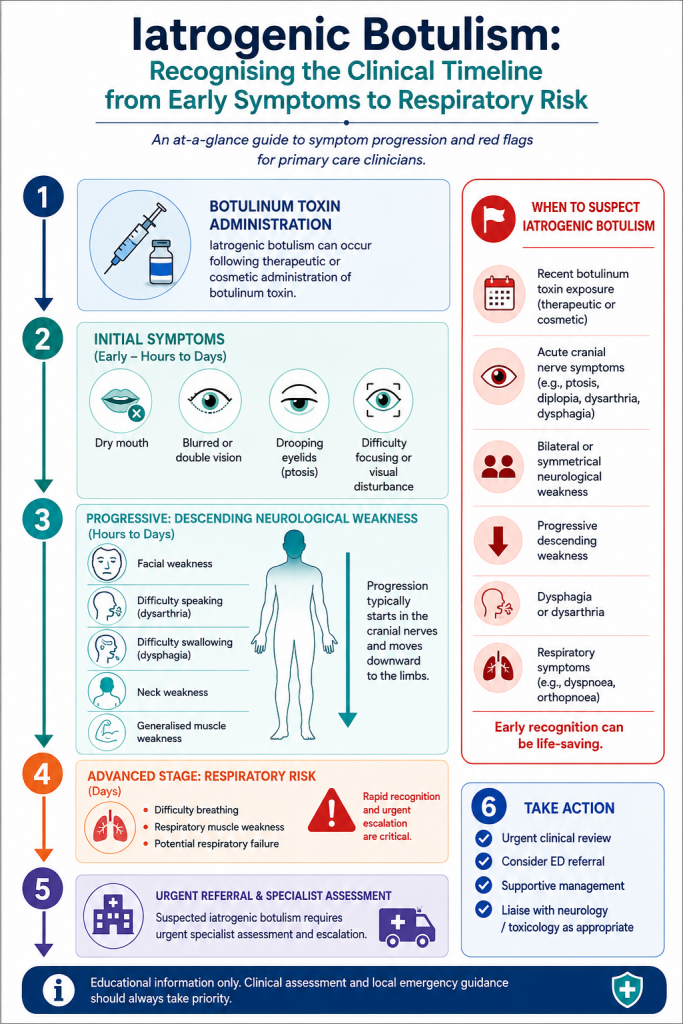
Key Clinical Characteristics
- Recognizing Iatrogenic Botulism Symptoms: Patients may present with progressive bulbar and neurological symptoms, including dysphagia (difficulty swallowing), dysarthria (slurred speech), severe ptosis (drooping eyelids), double vision, respiratory distress, and generalized muscle weakness.
- Extended Onset Window: Unlike typical acute drug reactions, symptoms of botulism commonly emerge between 4 to 8 days post-injection, but can take up to four weeks to manifest fully.
- High-Risk Drivers: The risk of systemic toxicity rises significantly when using high doses, administering injections off-label into unapproved anatomical sites, or using unlicensed botulinum toxin products acquired outside regulated UK supply chains.
As detailed in the NHS overview of botulism, severe iatrogenic botulism is a medical emergency that can require hospital admission, intensive care support, and antitoxin administration.
The Challenges Facing GP Surgeries
When national safety alerts regarding widely used treatments are published, GP surgeries face distinct operational and clinical hurdles.
1. Complex Primary Care Triage
Differentiating early bulbar weakness or mild systemic side effects from non-urgent post-procedure anxiety requires careful clinical judgment. Frontline reception and triage staff must quickly identify red-flag symptoms (such as swallowing difficulties or shortness of breath) and escalate them appropriately.
2. Gaps in Private Sector Documentation
A significant proportion of adverse events stem from treatments administered in private, non-NHS settings where records may be sparse. When patients present to their NHS GP with complications, clinicians often struggle to confirm the exact product used, the total dose administered, or whether the product was legally licensed within the UK.
3. Administrative Workload & Safety Governance
Every MHRA drug safety update requires surgeries to review existing prescribing cohorts (e.g., patients receiving therapeutic injections for spasticity or urological conditions). Practice teams must update clinical templates, ensure robust consent processes, and maintain active Yellow Card reporting primary care channels.
How TMMT Supports Practice Safety & Capacity
Managing drug safety alerts alongside routine chronic disease reviews and daily acute prescribing can strain internal practice resources. This is where partnering with The Medicines Management Team (TMMT) offers an immediate, structured solution.
TMMT provides experienced, remote ARRS clinical pharmacists and pharmacy technicians who integrate directly into practice workflows. Fully funded under the NHS Additional Roles Reimbursement Scheme (ARRS), these clinical professionals take on complex prescribing audits, medication reviews, and safety alerts, relieving GP partners of significant administrative burden.
Operational Impact of Remote Clinical Pharmacists
- Proactive Safety Audits: TMMT pharmacists systematically search EMIS and SystmOne databases to identify patients prescribed therapeutic botulinum toxin products, ensuring their monitoring schedules and clinical documentation meet updated MHRA standards.
- Expert Patient Triage & Consultations: Qualified clinical prescribers handle complex patient queries regarding potential side effects, conducting structured consultations and providing clear, evidence-based safety netting.
- Seamless Yellow Card Reporting: When adverse drug reactions are suspected, TMMT pharmacy staff complete comprehensive Yellow Card reports on behalf of the practice, maintaining full regulatory compliance.
This systematic approach reflects TMMT’s broader commitment to clinical safety. Similar to our previous work on managing high-risk drug safety alerts and establishing robust safeguarding standards for CQC inspections, TMMT ensures that safety updates are implemented systematically without reducing daily clinical appointments.
To learn more about how our remote pharmacy teams can handle your surgery’s safety audits and daily medication tasks, explore TMMT’s medicines management service page.
Realistic Workflow Impact: A Practical Example
Consider a common scenario in general practice: a 34-year-old patient calls the surgery complaining of mild slurred speech and muscle tiredness ten days after receiving a facial injection at a local beauty clinic.
Under a standard practice setup, this call might require an urgent, unscheduled GP consultation, adding pressure to an already full clinic list.
With a TMMT clinical pharmacist embedded in the practice workflow:
- Targeted Clinical Assessment: The remote clinical pharmacist contacts the patient to perform a structured neurological and bulbar symptom check.
- Rapid Escalation Protocol: Identifying early signs of muscle weakness, the pharmacist follows UK Health Security Agency (UKHSA) guidance, liaising directly with local emergency care services for urgent evaluation while notifying the duty GP.
- Documentation & MHRA Reporting: The pharmacist documents the event in the patient’s record and submits a detailed Yellow Card report to the MHRA.
The duty GP remains fully informed without having to manage the initial triage and administrative processing, preserving valuable appointment slots for complex chronic disease management.
Conclusion: Safeguarding Patients While Protecting Practice Capacity
The updated warnings for botulinum toxin products highlight the ongoing need for vigilant drug safety governance in primary care. However, keeping pace with national alerts should not come at the expense of general practice capacity.
By establishing a structured clinical pharmacy framework, surgeries can ensure that drug safety alerts are audited and managed effectively. If your practice or PCN is looking to unburden its clinical team and optimize your ARRS funding, consider exploring the support options available through TMMT’s medicines management team. Delivering safe, high-quality care is best achieved when your workforce has the dedicated capacity to succeed.
Frequently Asked Questions
Primary care clinicians should monitor for difficulty swallowing (dysphagia), slurred speech (dysarthria), breathing difficulties, drooping eyelids (ptosis), double vision, and generalized facial or limb weakness following botulinum toxin treatment.
While symptoms typically present between 4 to 8 days post-procedure, the MHRA notes that systemic symptoms can develop up to four weeks after administration.
Suspected iatrogenic botulism is a medical emergency. Clinicians should advise the patient to seek immediate hospital emergency care, follow UKHSA management guidelines, and log a formal report via the MHRA Yellow Card scheme.
PCNs can deploy remote clinical pharmacists funded through the ARRS scheme to take ownership of safety audits, update clinical templates, conduct patient reviews, and execute MHRA drug safety actions across all member practices.
Unlicensed or counterfeit products acquired outside regulated UK supply chains lack verified quality, purity, and concentration controls. Inconsistent dosing significantly increases the risk of accidental systemic toxicity and severe adverse reactions.