

Working Successfully with Primary Care Partners: A Practical Guide for General Practice
Key Takeaways
- Establish clarity from the outset: Clearly define roles, responsibilities, workflows, competencies, working arrangements, and expectations through written SLAs, DPAs, DSAs, task descriptions, and SOPs.
- Integrate partners into the wider practice team: Primary care partners should not work in isolation. Effective inductions, named contacts, safeguarding information, clinical-system access, and regular communication help partners become part of the team.
- Prioritise communication and regular feedback: Maintain structured weekly, monthly, or quarterly review and feedback loops. Avoid unannounced workflow changes and ensure that concerns or changing requirements are communicated promptly.
- Maintain continuity, quality, and governance: Continuity of clinicians is important for building relationships and understanding local practice processes. Partners should also have audited compliance records, training logs, quality systems, and clear contingency arrangements.
- Recognise and address red flags early: Warning signs include clinicians being expected to work alone, short-notice changes, tasks outside agreed competencies, high staff turnover, vague verbal agreements, and inadequate staff-absence plans. These should trigger early review and corrective action.
- Keep patient benefit at the centre of the partnership: A successful partnership should ultimately provide safe, effective, responsive, and efficient care, reduce pressure on practice teams, improve access, and become genuinely embedded within the practice or PCN.
Introduction
General practice in the United Kingdom operates under continuous operational pressure, requiring surgeries and primary care networks (PCNs) to collaborate across multidisciplinary teams. While NHS initiatives such as the Additional Roles Reimbursement Scheme (ARRS) fund vital roles, including ARRS clinical pharmacists and pharmacy technicians managing these arrangements locally can introduce unexpected administrative burdens. Working successfully with primary care partners provides surgeries with a dependable framework to convert workforce investment into sustained clinical capacity without overwhelming practice leadership.
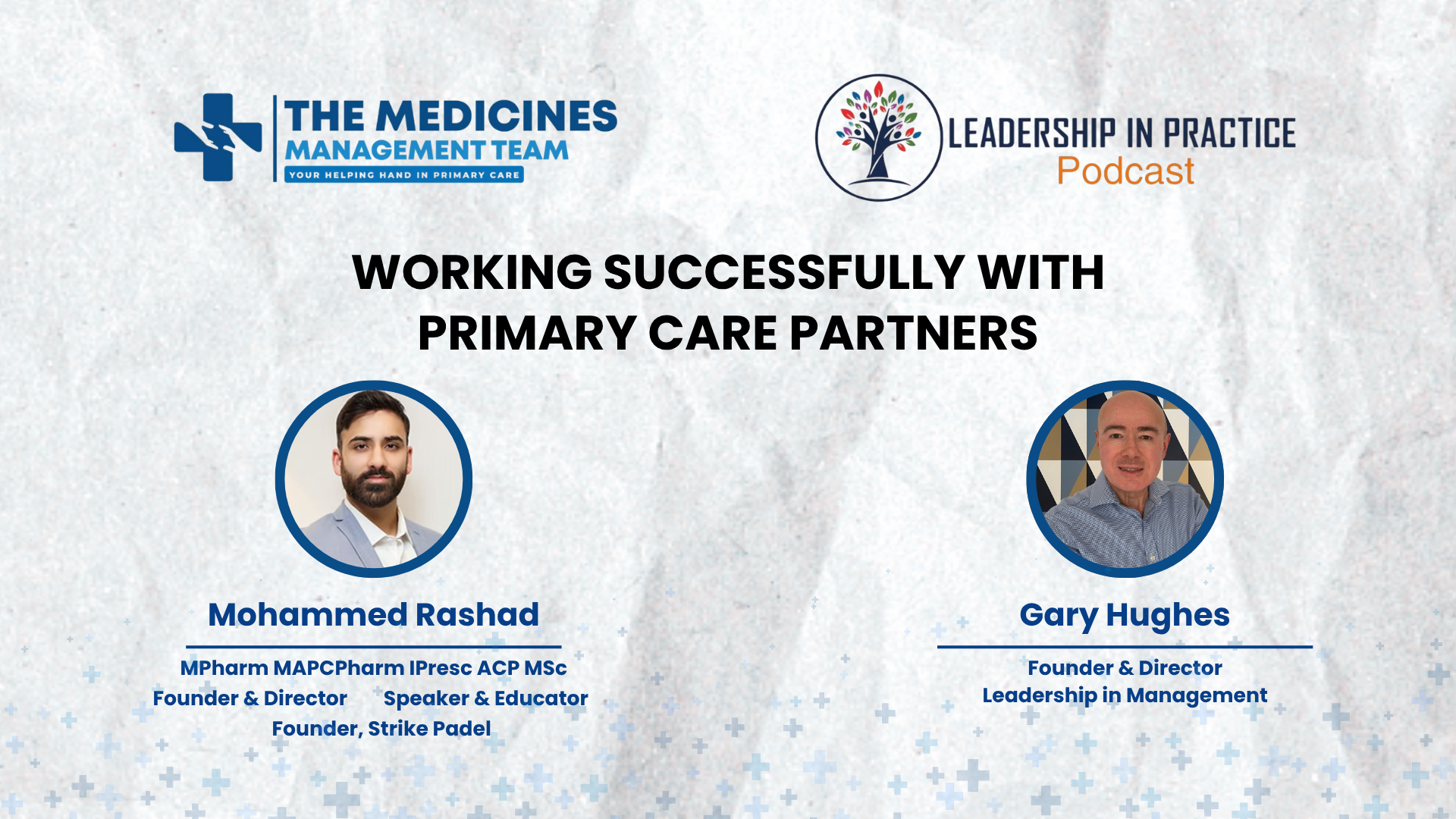
In an episode of the Leadership in Practice podcast, host and former practice manager Gary Hughes explored this evolving landscape with Mohammed Rashad, Senior Clinical Pharmacist and Director at The Medicines Management Team (TMMT). Drawing on TMMT’s experience supporting over 85 PCNs and more than 250 GP practices across the UK, their discussion offers practical guidance for healthcare leaders seeking productive, safe, and sustainable collaborations.
Establishing Clarity: Written SOPs and Stakeholder Alignment
A successful partnership begins with defined expectations before clinical delivery starts. Without documented operational parameters, misaligned priorities can lead to confusion and inefficiency.
“When working with a primary care partner, I think the first important step is clarity. Before hiring or engaging with a primary care provider or partner, you really need to clarify, as a practice, PCN, or federation, exactly what support you need… Everyone needs to be on the same page.”
— Mohammed Rashad, Director at TMMT
- Aligning Competing Priorities: A GP partner may focus primarily on Quality and Outcomes Framework (QOF) indicators, whereas a practice manager or PCN director may focus on network targets. Documenting shared objectives ensures all leaders work toward the same outcomes.
- Documenting Standard Operating Procedures: Practices handle routine tasks differently. For instance, medication review recall processes vary—some practices align reviews with birth months, while others schedule them around high-risk drug monitoring dates.
- Creating a Written Role Specification: Documenting specific responsibilities, rotas, and working patterns acts as a clear job description, ensuring external clinicians and practice staff share identical expectations.
Onboarding and Communication: Treating Partners as Core Team Members
External clinicians deliver the greatest value when they are fully integrated into practice culture rather than left to work in isolation.
Effective Partner Integration Pathway
| Technical & Operational Integration | Clinical & Cultural Integration |
| • Pre-tested Smartcards | • Welcome pack & named contacts |
| • Clinical system access | • Bypass phone lines & safeguarding leads |
| • SLA, DPA & DSA signed | • 30-minute introductory orientation |
| • Verified training logs | • Scheduled weekly / monthly feedback loops |
Providing an induction booklet with essential practice details, such as internal telephone bypass lines, key contacts, and named safeguarding leads empowers a remote clinical pharmacist or technician to resolve queries efficiently.
Equally vital is proactive communication. Leaving a clinician to work in isolation for months without structured feedback risks embedding inefficient habits. Establishing regular check-ins, progressing from weekly to monthly and quarterly reviews ensures administrative and clinical friction is addressed early.
Embedding Clinical Governance and Quality Management Systems
Maintaining clinical governance in primary care requires formal administrative structures that protect patient safety and ensure organizational compliance. During periods of intense workload, practices may feel tempted to onboard rapid support without completing basic due diligence, a misstep that introduces clinical risk.
A dependable primary care partner provides:
- Formal Operational Agreements: Fully executed Service Level Agreements (SLAs), Data Sharing Agreements (DSAs), and Data Processing Agreements (DPAs) in place prior to clinical delivery.
- Verified Clinician Passports: Documented training records, professional registrations, and pre-verified compliance profiles using platforms such as Blue Stream Academy, Practice Index, or TeamNet.
- Standardized Quality Frameworks: Operating under an ISO 9001 quality management framework ensures structured processes, routine audits, and continuous service refinement.
Identifying Red Flags: Practice and Provider Perspectives
Successful relationships require mutual accountability. Recognizing operational warning signs early enables leadership to realign expectations before patient care is affected.
Red Flags and Recommended Actions
| Perspective | Operational Red Flags | Recommended Action |
| Practice Red Flags (from partner view) | • Expecting clinicians to work in isolation | • Designate a primary clinical contact |
| • Unannounced, short-notice workflow changes | • Maintain written task descriptions | |
| • Booking clinical tasks outside agreed competencies | • Conduct regular review meetings | |
| Provider Red Flags (from practice view) | • High staff turnover without clinician continuity | • Demand single-point clinician continuity |
| • Vague verbal agreements without written SLAs | • Require audited compliance documentation | |
| • Lack of contingency plans for staff absence | • Request formal business continuity plans |
Regulatory Accountability and Defining Success Under CQC
Under Care Quality Commission (CQC) standards, general practices remain legally responsible for the care delivered to their registered population, regardless of whether aspects of that care are delivered by third-party partners. Surgeries cannot outsource clinical accountability.
“When a practice, PCN, or federation outsources a service, they are still responsible because they’re their patients. They’re responsible for the safe and effective care of their patients. You can’t simply outsource that responsibility.”
— Mohammed Rashad
Practices should verify that their partner conducts 3-to-6-month appraisals, logs errors via standardized NHS routes, and provides ongoing clinical education on topics such as COPD management.
Hallmarks of Partnership Success
- Measurable reduction in GP daily workload
- Fully booked clinical sessions with zero empty slots
- Positive feedback from practice staff and patients
- Shifting from reactive firefighting to proactive planning
A partnership demonstrates true success when appointment ledgers are fully utilized, staff report noticeable reductions in administrative stress, and the practice transitions away from reactive firefighting within 3 to 6 months.
How Specialized Pharmacy Support Optimizes GP Practice Workload Management
Integrating experienced pharmacy professionals through structured medicines management services delivers immediate relief to surgery appointment books while safeguarding clinical precision.
- Structured Medication Reviews (SMRs): Dedicated clinicians systematically review complex polypharmacy and frail patients, reducing overprescribing and adverse interactions.
- Hospital Discharge Reconciliations: Timely transcription and reconciliation of secondary care summaries prevent medication discrepancies and post-discharge complications.
- Repeat Prescription Management: Handling daily reauthorizations, synchronization, and acute queries unburdens duty doctors and directly improves GP practice workload management.
- Cross-System Best Practice: Mature partners share modern therapeutic updates such as recent guidance on SGLT2 inhibitors and DOAC monitoring and provide one-page cheat sheets to help receptionists navigate bookings accurately.
Capturing and Celebrating Patient Feedback
A patient centered partnership actively captures the lived experience of service users to measure quality and reinforce clinical morale. Gathering structured patient feedback ensures that clinical enhancements translate into clear improvements in patient access and satisfaction.
“I’ve always told my staff and clinicians: always get positive feedback in writing. Ask the patient to email the practice, leave a Google review, or provide feedback in whatever appropriate way is available. If you’re doing good work, you should capture that… That’s why, as a company, whenever we receive good feedback, we pass it on to the practice and let the clinician know. We’ve also got an internal reward mechanism, such as ‘Pharmacist of the Month’ and ‘Pharmacist of the Year.’ These things are very important for building a good learning culture and recognising good work.”
— Mohammed Rashad
Sharing positive written testimonials with practice leadership provides tangible evidence of high quality care, reinforcing the collaborative culture between external clinicians and in-house surgery teams.
Building Sustainable Primary Care Partnerships
Working successfully with primary care partners relies on clear expectations, strong governance, and treating external clinicians as valued members of the practice team. By pairing NHS workforce funding with specialized operational infrastructure, general practices can safeguard staff well-being, optimize their funding, and improve patient care.
To explore how flexible clinical pharmacy arrangements can support your surgery’s administrative and clinical workflows, visit The Medicines Management Team to discuss customized support for your practice.
Frequently Asked Questions
Partnering with a specialized provider allows PCNs and GP practices to deploy credentialed clinical pharmacists and pharmacy technicians under NHS reimbursement rules without absorbing the time, cost, and administrative risks associated with individual direct recruitment and training.
Yes. Surgeries remain legally responsible for the clinical care of their registered patients. Practices must verify that external partners hold up-to-date compliance files, conduct structured clinical audits, and maintain standardized error-reporting mechanisms.
Before clinical delivery commences, practices and providers should have a fully signed Service Level Agreement (SLA), Data Sharing Agreement (DSA), Data Processing Agreement (DPA), and verified clinician training passports.
Surgeries should provide a comprehensive welcome pack with named clinical and administrative contacts, internal telephone bypass lines, and safeguarding leads. Establishing scheduled weekly touchpoints that transition into monthly reviews ensures continuous alignment.