

Quick Reminder for Healthcare Professionals: MERS-CoV Risk Assessment for Patients Returning from Hajj or Umrah
What is MERS?
- Rare but severe respiratory illness.
- Symptoms: fever, cough, pneumonia, breathing difficulties, diarrhoea, vomiting.
Origin and Spread - Identified in 2012 in the Middle East.
- Mainly spread from camels to humans.
- Low risk in the UK; only 5 cases since 2012.
Transmission - Spread through contact with infected animals and person-to-person via cough droplets.
- Not highly contagious without close contact.
Risk Levels - UK Residents: Very low risk of infection within the UK.
- Travellers to the Middle East: Very low risk, but higher for those exposed to camels, camel products, or the local healthcare system.
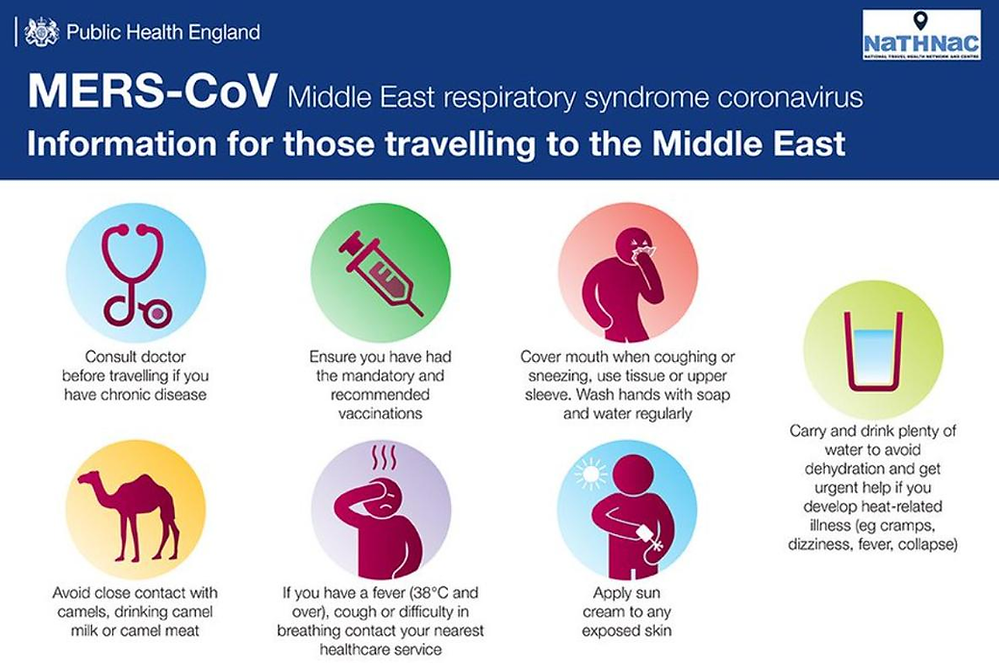
Advice for Travellers to the Middle East - Practice good hygiene, wash hands regularly.
- Avoid contact with camels and raw camel products.
- Avoid raw milk and products potentially contaminated with animal secretions.
Advice for Returning Travellers - Seek medical advice if you develop fever, cough, or difficulty breathing within 14 days of returning.
- Contact NHS 111 or a GP.
Treatment and Mortality - No specific treatment; symptomatic relief only.
- Approximately 35% mortality rate for those infected.
Action Steps - Call a GP or NHS 111 if you have symptoms and a recent travel history to the Middle East or contact with a confirmed case.
References: - https://www.nhs.uk/conditions/middle-east-respiratory-syndrome-mers/
- https://www.gov.uk/government/publications/mers-cov-public-health-investigation-and-management-of-possible-cases
- https://www.who.int/health-topics/middle-east-respiratory-syndrome-coronavirus-mers#tab=tab_1