

Involving people to manage risks: What ‘Good’ looks like for GP practices
The CQC quality statement on involving people to manage risks underpins the ’Safe’ and ‘Well-led’ key questions. The following statements explain in more detail what is expected:
We work with people to understand and manage risks by thinking holistically so that care meets their needs in a way that is safe and supportive and enables them to do the things that matter to them.
People are informed about any risks and how to keep themselves safe.
Risks are assessed, and people and staff understand them.
There is a balanced and proportionate approach to risk that supports people and respects the choices they make about their care.
When people communicate their needs, emotions or distress, staff can manage this in a positive way that protects their rights and dignity and maximises learning for the future about the causes of their distress.
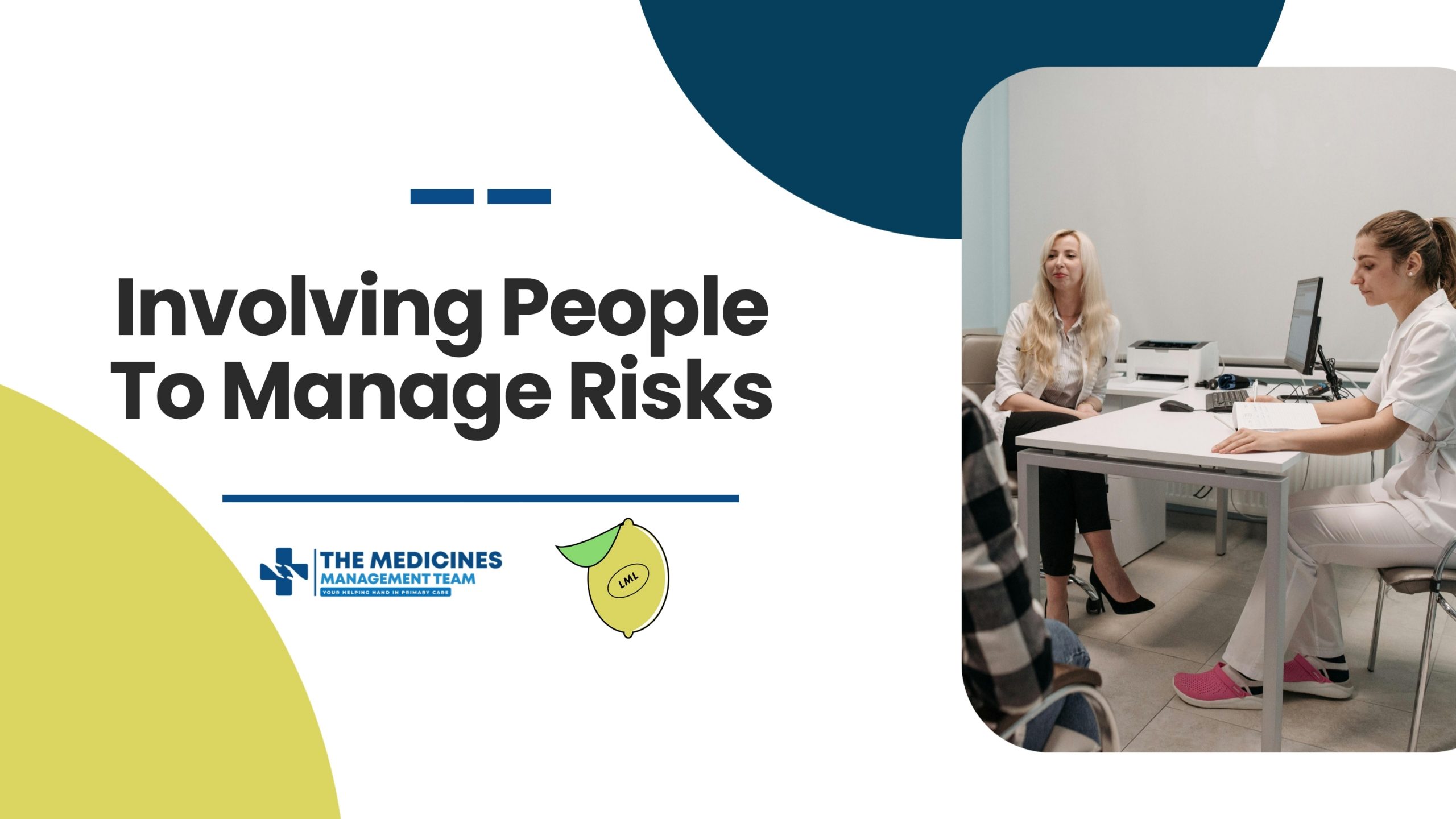
To achieve a ‘Good’ rating, it is not enough to have policies on the shelf; practices need to be able to show that patients are actively, routinely and meaningfully involved in identifying, understanding and reducing risks to themselves and in the way a practice operates. Inspectors will be looking for evidence that this is embedded throughout governance, culture and everyday processes.
The Patient Participation Group (PPG)
A key foundation is having clear, functioning structures for patient involvement. An active PPG is central to this. From a CQC perspective, a ‘Good’ practice can demonstrate that its PPG is not just a token group but is engaged in discussions about safety, access, quality and equity of outcomes. Therefore, there ought to be clear terms of reference that explicitly includes patient safety and risk, regular meetings with agendas and minutes, and a track record of the PPG influencing decisions. A practice should be able to point to concrete examples where PPG input has led to changes that reduce risk, such as improving confidentiality at reception, adjusting appointment systems for vulnerable groups, or refining communication about test results and referrals. Inspectors will also be interested in how a practice ensures that all population groups receive the same outcomes, so it is helpful if a PPG considers the needs of people with disabilities, language barriers and those from more deprived backgrounds.
NHS Patient Safety Programme
Alongside the PPG, NHS England now expects providers to move towards more formal patient involvement in safety at practice, PCN or place level, depending on size and capacity. A practice aiming for ‘Good’ should at least be able to show that it has considered having a formal patient safety programme patient who is involved in reviewing themes from incidents and complaints, commenting on patient‑facing safety information, and contributing to discussions about access, diagnosis, medication and referral safety.
Involving a patient in the risks their own care
The CQC will also look closely at how you involve patients in managing risks in their own care. This is about the quality of your communication and the clarity of your processes. Practices should be able to show that patients are given clear information on how to raise concerns or complaints, how to give feedback, and what to do if they feel something is unsafe. The waiting room, website and social media pages should visibly support this, for example by explaining how to provide feedback and how the practice uses it.
Inspectors may observe reception and clinical interactions to see whether patients are listened to, whether consent and shared decision‑making are evident, and whether staff explain risks and options in a way that patients can understand. They may also review some notes so see documented evidence of shared decision making and risk discussions – this is where Ambient Voice Technology can come in handy as it often documents are more detailed account of the consultation. There are also read codes for ‘shared decision making’ that practices may want to use to help evidence this. CQC reports have praised practices previously that have consciously audited a selection of medical records to check that shared decision making is happening, and has been documented.
Equally, the documentation of informed consent and the use of consent protocols for regular interventions such as joint injections, will count as evidence towards this quality statement.
Patient Feedback
Collecting feedback is only part of the picture; to achieve a ‘Good’ rating a practice must be able to show that – even if the feedback is excellent – it is systematically used to manage risk and improve safety. This means having clear mechanisms for feedback, such as practice surveys (including the national GP Patient Survey which the CQC will make note of), suggestion boxes, online forms, and a complaints procedure that is publicised and compliant with the NHS Complaints (England) Regulations 2009.
Feedback, complaints and compliments should be discussed regularly at clinical and whole‑practice meetings, and with the PPG. It is helpful to maintain “You said, we did” examples that show how patient feedback has led to specific changes, such as altering telephone systems, revising triage processes or improving privacy at reception. Where feedback or complaints highlight safety issues, these should be logged and, where appropriate, recorded as patient safety events in the national Learn from Patient Safety Events (LFPSE) service.
In summary, a well-functioning PPG that is actively involved in shaping how the practice is run and delivers it care, with documented evidence of this from meeting minutes, is the most robust way to provide evidence under this quality statement. However, do expect to receive comments from the CCQ about the results of the relevant questions in the GP patient survey, and how your practice compares to the average. Do also expect an audit of consultations to look for evidence of shared decision making and discussion of treatment risks with patients, and consider coding to help you achieve a good outcome from this.
Below are some useful resources from the CQC, if you would like to start working on your compliance in this Quality Statement:
- Care Quality Commission – Regulation 13: Safeguarding service users from abuse and improper treatment: https://www.cqc.org.uk/guidance-providers/regulations-enforcement/regulation-13-safeguarding-service-users-abuse-improper
- Nigel’s Surgery 25 – Safeguarding adults at risk: https://www.cqc.org.uk/guidance-providers/gps/nigels-surgery-25-safeguarding-adults-risk
- Nigel’s Surgery 33 – Safeguarding children: https://www.cqc.org.uk/guidance-providers/gps/nigels-surgery-33-safeguarding-children
Watch the entire webinar series on our Youtube channel.