


Developing a Primary Care Ready Pharmacy Workforce
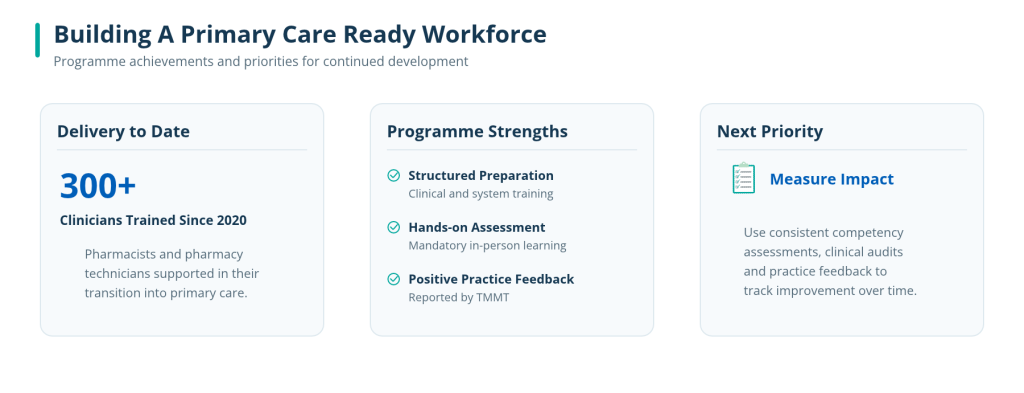
Since 2020, The Medicines Management Team (TMMT) has trained more than 300 clinicians to support their transition into primary care. Its structured programme combines clinical education, practical system training and supervised hub-based learning to prepare pharmacists and pharmacy technicians for work with GP practices and Primary Care Networks (PCNs).
Clinicians Trained Since 2020
Practical Training Component
Clinical Systems Covered – EMIS, SystemOne & Vision
Clinical Curriculum Areas
Hub Visit Per Week
Programme Established
Key Learning Points
This case study demonstrates:
Problem
Clinicians joining primary care bring different levels of clinical experience, system knowledge and confidence. TMMT found that a basic induction did not always prepare staff for clinical coding, repeat prescribing, structured medication reviews or remote communication with practices. Pharmacy technicians also needed role-appropriate preparation in documentation, medicines reconciliation and escalation.
Challenge
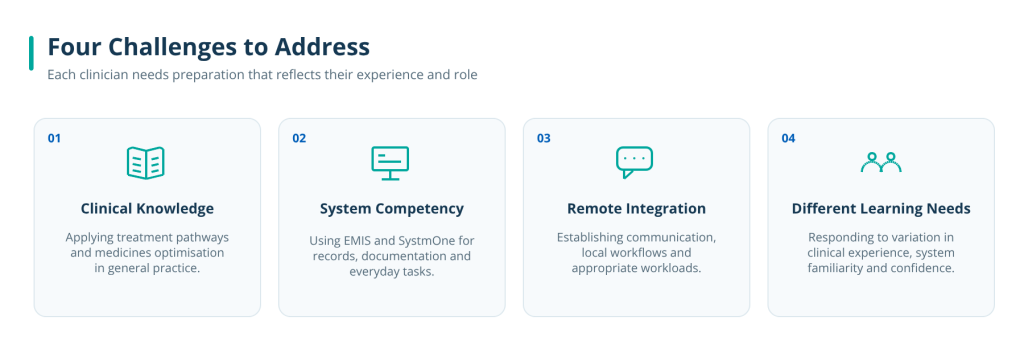
TMMT identified four areas requiring improvement: clinical knowledge, clinical-system competency, remote practice integration, and variation in staff experience and confidence TMMT 2020.
Solution
The Medicines Management Team developed a structured hub-based training model with a core 10–28 days of practical training, followed by continued supervision. Mandatory in-person attendance allows trainers to observe practical work, provide immediate feedback and address technical or clinical difficulties before staff begin working remotely.
The proposed quality-assurance framework would formalise attendance and competency records, clinical audit, practice feedback, programme review and follow-up monitoring. A consistent audit schedule would allow comparisons between cohorts and help demonstrate the effect of training changes.
Outcomes Achieved:
Conclusion:
The Medicines Management Team’s experience highlights the importance of preparing pharmacy professionals for the practical demands of primary care. Its evolving training model brings together clinical learning, system competency, in-person assessment and ongoing support to help establish consistent working practices across a remote workforce.
The next step is to strengthen consistent outcome measurement, using competency assessments, audits and practice feedback to demonstrate where the programme improves performance and where further support is needed..
SAVE UPTO £30,000 per
pharmacist
Contact us to find out how much your GP practice could save.